
Tiny Changes, Big Wins: How "Atomic Habits" by James Clear Can Transform Your Life
Views & reviews: essays and book reviews

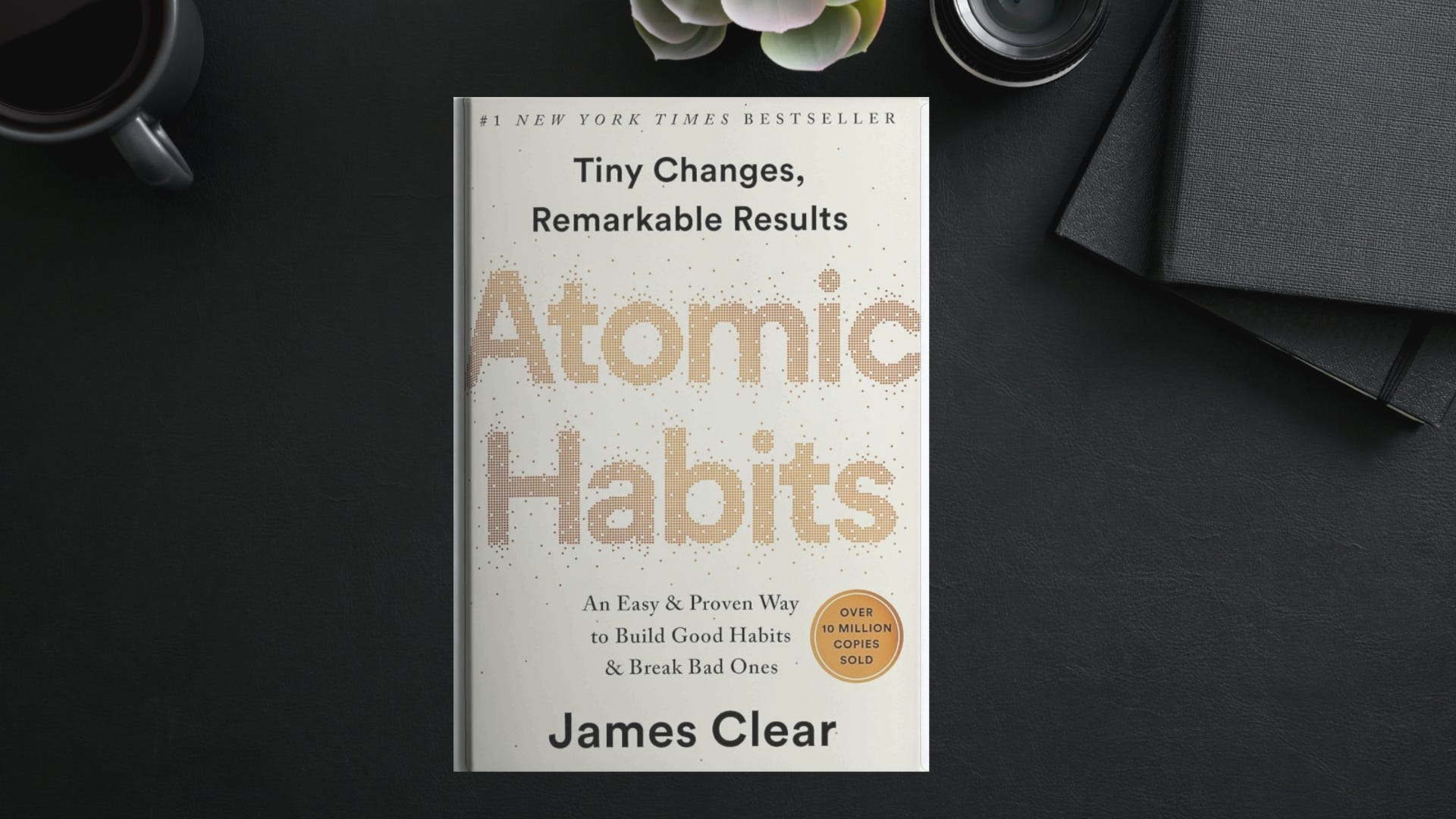
When my wife recommended I read or listen to James Clear’s Atomic Habits, I was intrigued but skeptical. Like many, I had heard my fair share of self-help advice about habits, much of it redundant or impractical. However, I decided to give it a shot and started listening to the audiobook during my gym workouts. Almost immediately, I realized Atomic Habits was not just another addition to the crowded field of self-improvement literature. It’s simply terrific—a masterful synthesis of scientific research, personal anecdotes, and actionable advice that can truly transform your life.
Clear’s central thesis is that small, incremental changes in behavior— “atomic” habits— can compound over time to produce remarkable results. He emphasizes that success doesn’t come from massive, immediate overhauls but from consistent, 1% improvements that build momentum and lead to exponential growth. This concept resonated deeply with me, particularly during workouts, where progress can often feel painfully slow. Clear’s insight helped me see that each small step forward was part of a larger trajectory toward achieving my goals.
One of the standout aspects of Atomic Habits is its focus on the systems behind habits rather than solely on goals. Clear argues that goals are good for setting a direction, but systems are what drive progress. For example, instead of setting a vague goal like "get in shape," he recommends creating a system, such as committing to daily movement or preparing meals in advance. As another example, rather than saying “I want to generate more business,” create daily business development habits such as devoting 30 minutes each day, perhaps at the same time each day, to reaching out to prospective clients or customers. This shift in perspective—from outcome-driven to process-oriented—is not only liberating but also much more effective.
Clear’s framework for building good habits and breaking bad ones is encapsulated in what he calls the “Four Laws of Behavior Change”:
1. Make it obvious.
2. Make it attractive.
3. Make it easy.
4. Make it satisfying.
Each law is paired with a counterstrategy for avoiding bad habits: make them invisible, unattractive, difficult, and unsatisfying. For instance, if you want to eat healthier, Clear suggests keeping fruits and vegetables in plain sight while hiding junk food in less accessible places. This simple adjustment aligns with the first law, "Make it obvious," by leveraging visual cues to encourage better choices.
Visual cues have been particularly impactful in my own life. Inspired by Atomic Habits, I now closely track my daily exercise routine on my smartphone. This practice not only keeps me accountable but also provides a satisfying sense of accomplishment as I see the streaks build. Clear explains that visual trackers create a powerful psychological incentive to maintain consistency, a strategy I’ve shared with my coaching clients, many of whom have reported similar success.
One example from the book that stood out to me was Clear’s story about the British cycling team. For years, the team struggled with mediocrity until they adopted a philosophy of "marginal gains," making 1% improvements in seemingly minor areas like seat design, handwashing techniques, and even the type of massage gel they used. These small adjustments compounded to produce astonishing results, culminating in multiple Tour de France victories and Olympic gold medals. This story encapsulates the power of Clear’s principles: even the tiniest changes can lead to transformative outcomes over time!
Another key insight from Atomic Habits is the importance of identity-based habits. Clear argues that lasting change is more likely when it aligns with your sense of self. Instead of saying, "I want to run a marathon," say, "I am a runner." This subtle shift transforms the habit from an external goal into an integral part of your identity. I’ve applied this principle in my own life by expressly embracing the identity of a learner and writer, which motivates me to read, write, and explore new ideas daily.
Clear also delves into the science of habit formation, explaining how habits operate through a feedback loop of cue, craving, response, and reward. By understanding this cycle, you can design habits that stick or dismantle those that don’t serve you. For example, if you want to break the habit of mindlessly scrolling on your phone, Clear suggests creating a "friction point" by placing the phone in another room during work hours. On the flip side, if you want to cultivate a habit of reading more, you could pair it with an existing routine, like reading a few pages with your morning coffee. Clear calls this “habit stacking,” (i.e. stacking the two habits of drinking your morning coffee and reading) an important technique.
The practicality of Atomic Habits extends beyond personal improvement to professional and familial contexts. As an executive coach, I’ve incorporated Clear’s lessons into my work with clients. Whether it’s helping someone develop more business, improve their leadership skills, or balance their family life, the principles of small, consistent improvements and identity-based habits are universally applicable. For instance, I encourage clients to use the "two-minute rule," another gem from the book, which suggests starting any new habit by committing to just two minutes. This lowers the barrier to entry and often leads to more substantial engagement over time.
Clear’s writing is clear (no pun intended), engaging, and refreshingly free of fluff. His examples are relatable, and his strategies are backed by solid research. Unlike many self-help books that regurgitate the same tired advice, Atomic Habits feels original, insightful, and immediately actionable.
For me, Atomic Habits is not just a book; it’s a paradigm shift. It has profoundly influenced how I approach my personal and professional life, from setting up systems to cultivate better habits to dismantling those that no longer serve me. It’s a book I recommend to all my coaching clients and friends, and I’ve found that its lessons resonate with people from all walks of life. Many people I know have raved about Atomic Habits. Whether you’re looking to improve your health, advance your career, or strengthen your relationships, Clear’s wisdom provides a roadmap to success.
In closing, Atomic Habits has the potential to be one of the most impactful books you’ll ever read. It’s not hyperbole to say it could be life-changing. By focusing on the small things—those “atomic” habits—you can create a ripple effect that transforms every aspect of your life. If you’re ready to make lasting change, start with this book. You won’t regret it.
(The author received a B.A. degree in Philosophy from The Johns Hopkins University and a Juris Doctor degree, with Honors, from The George Washington University Law School. The website for his executive coaching company, MasterMethod is found at www.mastermethod.co.)